Aristide Gattavecchia
Scultore e Pittore
2023 - interview with Leonarda Zappulla
For information and contact details for Aristide Gattavecchia, sculptor and painter, visit the website or write directly to:
www.gattavecchia.it
www.gattavecchia.eu
email: aristide@gattavecchia.it

Sculptor and Painter
Italian artist of the 1900s

.png "artboxy)")
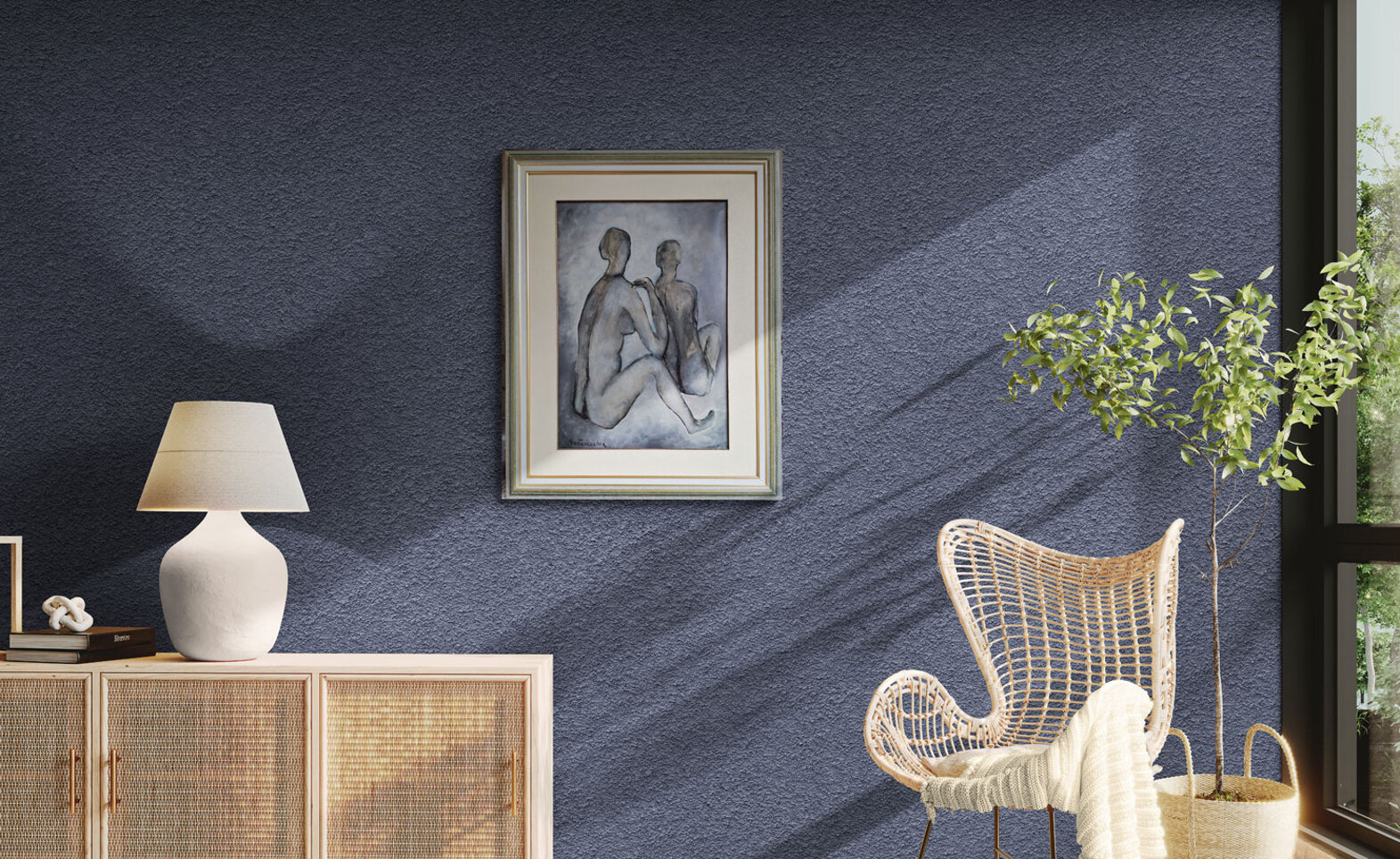

2023 - Art critic Leonarda Zappulla interviews Marco, the artist's grandson
2021 Interview given to DeAgostini
released to De Agostini on the occasion of its inclusion in the Atlas of Contemporary Art
WHAT TYPE OF POETRY IS DEALT WITH IN THE WORKS (FIELDS OF INVESTIGATION AND RESEARCH)?
Aristide Gattavecchia dealt with powerful themes such as violence (war), incommunicability, and loneliness.
He also addressed the themes of a rapidly changing society that is unable to deal with and organize change in an appropriate manner: ecology, saving, consumerism.
Finally, he dealt with topics that are more relevant than ever, such as homosexuality and discrimination.
He investigated the human soul, pushing himself to the most raw and intimate observation.
His research led him to make very specific choices regarding his palette, using bright red tones to represent the psychosis of fear and bold black brushstrokes to outline bodies and objects.
As he is also a sculptor, his paintings are often transformed into sculptures and reflect the representative power of sculpture, which has no color but all the chromatic variations from white to black.
WHAT EXPERIENCES OR EVENTS IN YOUR LIFE HAVE HAD A SIGNIFICANT IMPACT ON YOUR ARTISTIC WORK?
The paintings produced by the artist during his long life clearly demonstrate the events that influenced his entire body of work.
His early works from 1947-1948 appear to be marked by the pain and terror of war, when he was in the prime of his youth, and those events broke something inside him that would never be repaired.
During that period, he drew pointed hands, skeletal faces, and armless nudes (“Oggetti” 1948, ‘Pensieri’ 1947, “Pensieri II” 1948).
These were followed by paintings of serene domestic settings (“Vele,” “Vaso azzurro” “Green Corner”), but there were also returns to red tones and female figures marked by suffering (“Leda” 1950).
Even the landscapes of his beloved Cesena were tormented by gray and dark skies with unsettling white patches (“Over the City” 1953).
The 1960s, the years of the economic boom, had a significant influence on Gattavecchia's art. He became increasingly intrigued by new developments, enthusiasm for life, and the desire to leave everything behind (“Il bouquet” 1960, “Still Life” 1962, “On the Beach” 1965), even if the ghosts of the past occasionally returned with dark and undefined figures (‘Intrusions’ 1962, “The Gaze” 1962).
The works produced in the 1970s reflect the dramatic social changes taking place at the time and address themes that are still relevant today, such as consumerism, with houses “spewing out” superfluous objects (“Tempi moderni I” [Modern Times I], 1971), and waste (“Tempi moderni II” [Modern Times II], 1971), with rubbish piling up outdoors in arid spaces.
The landscapes appear more serene, but are still represented in conditions of muffled yellow light, as if imbued with a sort of melancholy (II Savio, 1975).
The influences on his artistic activity also involve materials. During those years, the artist temporarily abandoned canvas to paint on plastic.
He was also influenced by the consequences of the ferment that the art world was experiencing, thanks to the speed with which ideas, information, and culture were exchanged.
He created the abstract paintings “Frammenti” (Fragments) 1979.
These are six works painted, cut out, and then glued back together, through a process of symbolic reconstruction. The whole is actually made up of different parts, like the intimate essence of a person.
Another dominant theme in Gattavecchia's art is that of incommunicability. Society has changed profoundly. From life on the streets, when “everyone knew each other” and helped each other, we have moved on to life behind locked doors, where everyone thinks only of themselves. This gave rise to paintings such as “Indifferenza” (Indifference) and “Enigma” (Enigma) from 1979, in which the faces do not communicate, the mouths do not speak, and the eyes do not look. Each character is closed in on themselves and avoids any form of communication.
These themes are still relevant today!
His paintings from the 1980s deal with themes that are still relevant today, such as homosexuality (Le Amiche, 1984) and loneliness (Pensando, 1983; Aspettando, 1985; Solitudine, 1987).
But the event that shocked the artist after World War II was the Chernobyl nuclear accident. He painted “Cernobyl” (1986) and “Effetto Radioattivo” (1986), which depict women and children without hair and without expression. They seem frozen in time, stuck in words and gestures. The yellow or red color makes them unpleasant to look at. There is no joy of youth or enthusiasm for life.
These were among his last paintings in color; later, he used almost exclusively black and white, as if life were too painful to represent in color.
In the paintings of the 1990s, shapes and people merge and blend together. Are the objects portrayed people or bottles? Can you know what is inside a dark bottle? Can you know what a person hides in their innermost being?
WHAT IS THE MISSION OF ART AND THE ARTIST IN THE PRESENT DAY?
The artist Gattavecchia conveyed various messages through his work, particularly messages of protest.
His art sought to provoke reflection, shock, and awaken people from the torpor of living without goals or plans, all conforming to the same desires and ambitions.
He wanted to encourage people to think.
He wanted to send a powerful message about developing one's individuality and making one's own choices.