Aristide Gattavecchia
Scultore e Pittore
2023 - interview with Leonarda Zappulla
For information and contact details for Aristide Gattavecchia, sculptor and painter, visit the website or write directly to:
www.gattavecchia.it
www.gattavecchia.eu
email: aristide@gattavecchia.it

Sculptor and Painter
Italian artist of the 1900s

.png "artboxy)")
Works
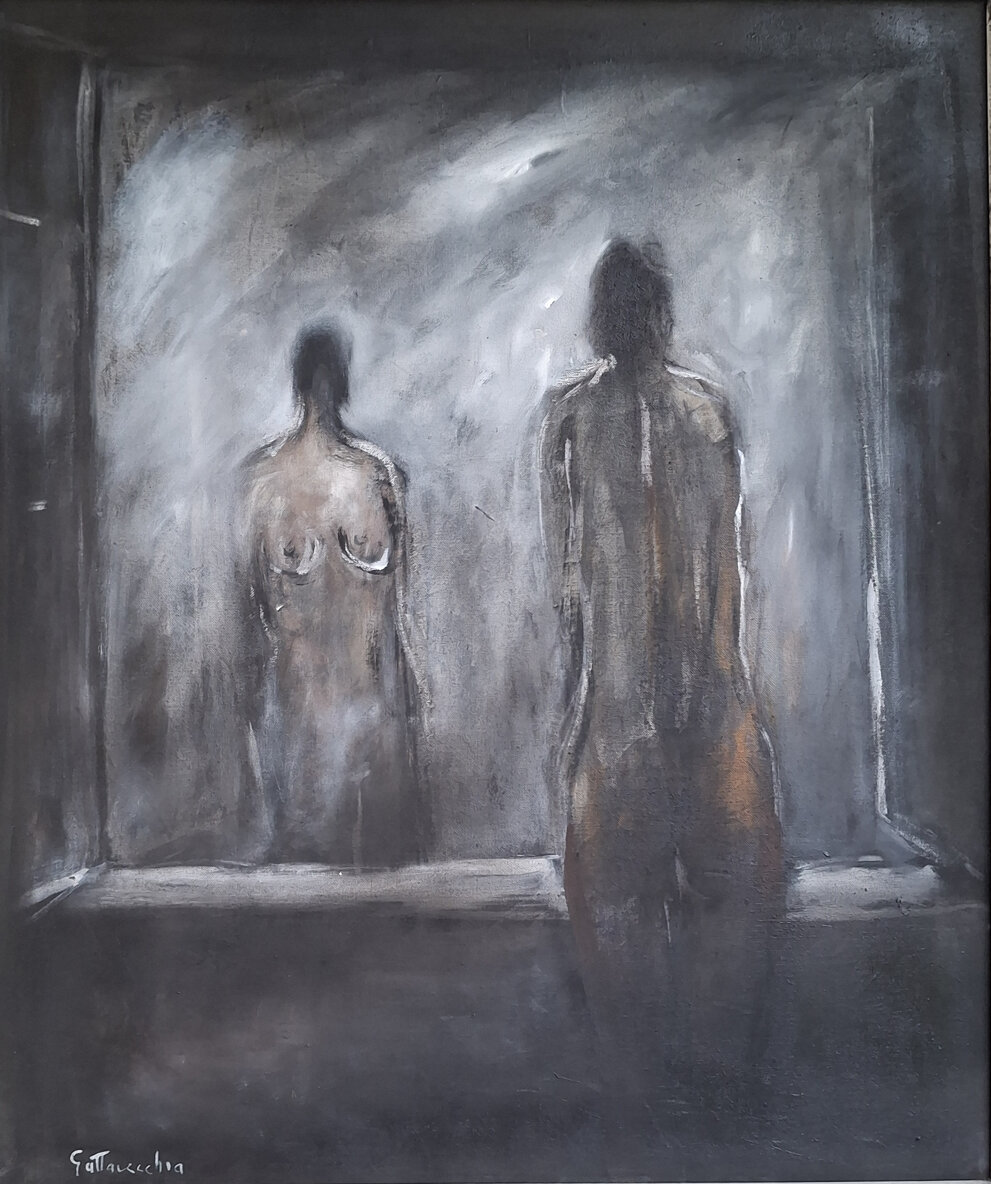

During various exhibitions, some of Gattavecchia's works have been the subject of critical analysis aimed at promoting greater understanding on the part of the observer of the techniques used and the themes addressed.
Go to “commented works”
Discover Gattavecchia's artistic journey: from his post-war works to the 1990s, exploring the themes of war, loneliness, and incommunicability.
Gattavecchia: The Artistic Journey
Gattavecchia was a painter active for over fifty years, whose artistic production is distinguished by its ability to reflect the profound historical, social, and individual transformations that shaped the twentieth century. His art explores themes such as war, suffering, consumerism, loneliness, and incommunicability.
The 1940s-1950s: The Trauma of War see works from the 1940s-1950s
Gattavecchia's early works from the 1940s are marked by the pain of World War II. The artist explores suffering and loneliness through powerful images, such as pointed hands and skeletal faces (Oggetti, 1948; Pensieri, 1947), but also scenes of domestic serenity (Vele, 1948) and female figures marked by suffering (Leda, 1950).
Translated with DeepL.com (free version)
The 1960s: The Economic Boom and Rebirth see works from the 1960s
In the 1960s, Gattavecchia was influenced by enthusiasm for modernity and the economic boom. His works became brighter and more optimistic, but there were still references to themes from the past and painful memories (Il Bouquet, 1960; Still Life, 1962; Intrusions, 1962).
The 1970s: Consumerism and Social Change see works from the 1970s
In the 1970s, Gattavecchia explored social themes such as consumerism and pollution. His works deal with the waste crisis and the excess of objects in modern homes (Tempi moderni I, 1971; Tempi moderni II, 1971). The landscapes become more serene but remain immersed in a melancholic light (Il Savio, 1975).
Incommunicability and Loneliness
A central theme in Gattavecchia's art is incommunicability. The artist explores isolation and the growing separation between individuals, as in Indifferenza (Indifference, 1979) and Enigma (Enigma, 1979). His works reveal an increasingly closed society, where faces do not meet and mouths do not speak.
The 1980s: Homosexuality, Chernobyl, and Solitude see works from the 1980s
In the 1980s, Gattavecchia tackled themes such as homosexuality (Le Amiche, 1984) and solitude (Solitudine, 1987). The Chernobyl disaster had a profound effect on the artist, leading him to create disturbing works such as Cernobyl (1986), in which he depicts women and children without hair, as if frozen in time.
The 1990s: Identity and Interiority see works from the 1990s
In the 1990s, Gattavecchia explored the fusion between objects and people. His works question intimacy and authentic communication, challenging the boundary between what is visible and what is hidden in the human soul (Oggetti neri, 1990; Vasi neri, 1990).